





Getting traffic to your website is exciting.
You work hard on SEO. You publish content. You invest in marketing. Slowly, more people begin to visit your site.
But then something frustrating happens.
Visitors read a page and leave.
They scroll a little.
Maybe they open another tab.
Then they disappear.
No inquiry.
No demo request.
No contact form.
Many B2B companies face this exact problem. They attract traffic but struggle to convert B2B website visitors into real leads.
This is where B2B conversion rate optimization becomes critical.
It is not just about getting more visitors. It is about helping the right visitors take the next step.
In this guide, you will learn:
- Why visitors do not convert
• How to turn website traffic into qualified leads
• Practical B2B landing page tips
• Real examples and expert strategies
If you want the full strategy behind lead generating content, you should also explore this complete guide.
Let us start with the basics.

What Does It Mean to Convert B2B Website Visitors?
To convert B2B website visitors means turning anonymous traffic into identifiable business prospects.
Instead of just reading a page, the visitor takes an action such as:
- Filling out a contact form
• Booking a consultation
• Requesting a demo
• Downloading a guide
• Signing up for a newsletter
This action turns a visitor into a lead.
In B2B marketing, this step is very important because buying decisions are complex. Companies rarely buy immediately. They research first.
So your website must help visitors move from interest to conversation.
Why Converting Website Visitors Is Hard in B2B
Many business owners feel confused here.
They see good traffic numbers in analytics but still receive very few leads.
This happens for several common reasons.
-
Visitors Are Still Researching
B2B buyers spend time learning before they talk to a company.
For example, industries like a contract research organization involve complex decision making and long evaluation cycles.
Visitors may need several touchpoints before contacting you.
-
Websites Focus Only on Information
Many websites explain services but do not guide visitors toward the next step.
The visitor reads everything but does not know what to do next.
-
The Message Is Too Generic
If your website talks to everyone, it connects with no one.
B2B visitors want to feel that you understand their specific industry problems.
-
The Website Feels Risky
Trust is critical in B2B.
If your site lacks credibility signals like results, case studies, or expertise, visitors hesitate to reach out.
These issues can be fixed with the right strategy.
Why B2B Conversion Rate Optimization Matters
B2B conversion rate optimization means improving your website so more visitors become leads.
Even small improvements can make a huge difference.
Example:
- 5,000 monthly visitors
• 1% conversion rate
• 50 leads per month
Now imagine improving the conversion rate to 3%.
You suddenly generate 150 leads without increasing traffic.
That is why optimization is so powerful.
It turns existing traffic into real business opportunities.
Step by Step Process to Convert B2B Website Visitors
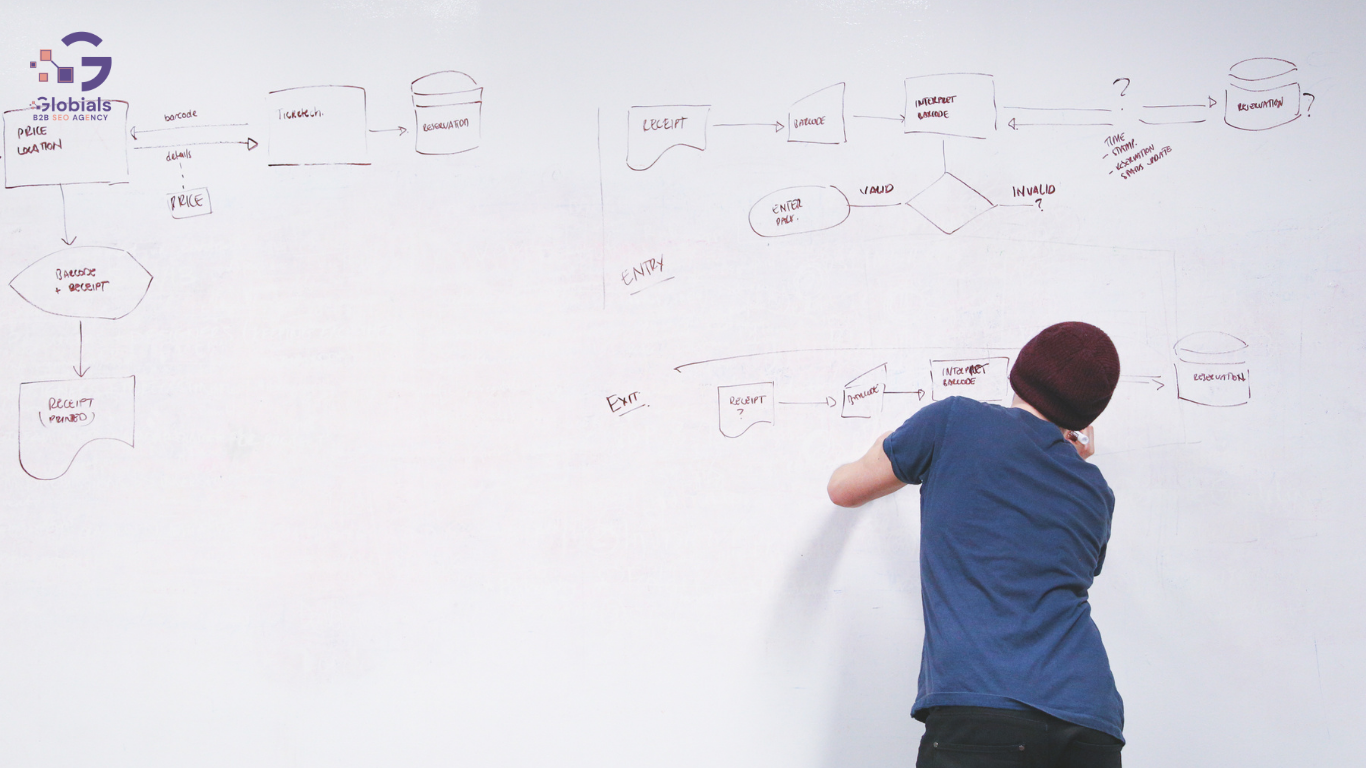
Let us break this into a clear process you can follow.
-
Understand Why Visitors Came to Your Website
Every visitor arrives with a goal.
Some are researching.
Some are comparing vendors.
Some are ready to talk.
Your website must match their intent.
For example:
- Blog readers want education
• Product page visitors want details
• Pricing page visitors want reassurance
When your page matches their intent, visitors feel understood.
And when people feel understood, they trust you more.
-
Make Your Value Clear in 5 Seconds
When someone lands on your page, they decide quickly whether to stay.
Within a few seconds, they should understand:
- What you do
• Who you help
• Why it matters
Avoid vague headlines.
Instead of writing:
“Leading digital solutions provider”
Write something clear like:
“SEO strategies that help B2B companies generate qualified leads”
Clarity increases conversions.
-
Build Trust Immediately
B2B buyers are careful.
They want proof before they reach out.
Your website should show credibility signals such as:
- Case studies
• Client logos
• Testimonials
• Industry experience
• Data backed results
These elements reassure visitors that they are dealing with professionals.
If you want to see real examples, you can explore the results and case studies page:
[INSERT URL]
Seeing real outcomes often removes hesitation.
-
Use High Converting Landing Pages
Your landing pages play a huge role in B2B conversion rate optimization.
A good landing page focuses on one goal only.
It should include:
Clear headline
Specific problem
Simple solution
Proof or results
Clear call to action
Avoid overwhelming visitors with too many choices.
Simplicity converts better.
Offer Valuable Lead Magnets
Sometimes visitors are interested but not ready to talk.
Lead magnets help capture those opportunities.
Examples include:
- Industry reports
• Guides
• Checklists
• Templates
• Research insights
These resources provide value first.
In return, visitors share their email.
Now you can continue the relationship.
Make Contact Easy and Comfortable
Many websites accidentally make contact difficult.
Long forms create friction.
Visitors prefer simple steps.
Good forms usually ask for:
Name
Email
Company
Short message
Nothing more.
Also make sure your call to action feels welcoming.
Instead of “Submit”, try:
“Speak with an expert”
or
“Request a consultation”
Visitors respond better to human language.
-
Guide Visitors Through the Buying Journey
Most B2B decisions involve multiple stages.
Awareness
Consideration
Decision
Your website should support each stage.
For example:
Blog posts educate visitors.
Service pages explain solutions.
Case studies prove results.
When all these pieces work together, visitors move naturally toward becoming leads.
Real Life Example of Converting B2B Website Visitors
Let us imagine a SaaS company offering project management software for engineering firms.
Their website receives 8,000 monthly visitors.
But they generate only 20 leads.
After reviewing their site, they notice several issues:
- No clear value proposition
• Weak landing pages
• No case studies
• Generic messaging
They implement improvements:
- Clear industry specific headline
- Landing pages targeting engineering firms
- Detailed case studies
- Free project workflow template
Within 4 months, results improve.
Traffic stays the same.
But leads increase to 110 per month.
The difference was not traffic.
It was conversion strategy.
Common Mistakes That Prevent Conversions
Many businesses unknowingly block their own growth.
Here are common mistakes.
Talking Only About Yourself
Many websites say:
“We are leaders”
“We provide innovative solutions”
But visitors care about their problems.
Focus on their challenges first.
Too Many Calls to Action
If every button says something different, visitors get confused.
Keep the journey simple.
One main goal per page works best.
Weak Headlines
Headlines must explain value immediately.
Vague headlines cause visitors to leave quickly.
Ignoring Mobile Users
Many B2B visitors research on mobile devices.
If your site is difficult to read on mobile, conversions drop fast.
No Proof of Results
Without proof, visitors hesitate.
Case studies and measurable outcomes remove doubt.
Expert Tips to Improve B2B Conversions

After years of working with B2B companies, several patterns appear.
These tips consistently improve results.
-
Focus on One Audience Per Page
A page targeting everyone rarely converts well.
Create pages for specific industries or roles.
Visitors connect more when they feel the page was written for them.
-
Use Real Language
Avoid complicated marketing words.
Write the way people speak.
Clear communication builds trust.
-
Answer Questions Before They Ask
Think about the doubts visitors may have.
Address them directly on your page.
For example:
Pricing concerns
Implementation time
Expected results
When you remove uncertainty, conversions increase.
-
Use Data to Improve Pages
Do not guess.
Use tools like heatmaps and analytics to see how visitors behave.
Small changes based on data often produce big improvements.
-
Keep Testing
Conversion optimization is an ongoing process.
Test headlines.
Test calls to action.
Test layouts.
Even small adjustments can improve results over time.
How This Connects to the Bigger B2B Marketing Strategy
Converting website visitors is not a standalone task.
It works best when connected with a broader content strategy.
Content attracts the right audience.
SEO increases visibility.
Landing pages convert that attention into leads.
That guide explains how B2B content marketing drives consistent lead generation.
When Should You Consider Expert Help?
Many companies try to improve conversions internally.
Sometimes it works.
But sometimes teams feel stuck.
Common signs you may need expert help include:
- Good traffic but few leads
• Unclear messaging
• Poor landing page performance
• Slow SEO growth
Experienced specialists can identify problems quickly.
Companies like Globials focus on performance driven SEO and B2B lead generation strategies that help businesses grow steadily.
Conclusion
Getting website traffic is only the first step.
Real growth happens when visitors become leads.
If your website is not converting well, you are not alone. Many B2B companies face the same challenge.
The good news is that conversion improvement is very possible.
Start by:
- Understanding visitor intent
• Clarifying your value
• Building trust
• Creating focused landing pages
• Offering helpful resources
• Making contact simple
Small changes can transform how your website performs.
And when your website consistently converts visitors into leads, your marketing begins to work the way it should.
FAQs
What does it mean to convert B2B website visitors?
It means turning website visitors into leads by encouraging actions like form submissions, demo requests, or consultations.
What is a good B2B website conversion rate?
Most B2B websites convert between 1% and 3%. Well optimized sites can achieve higher rates.
Why do B2B websites get traffic but no leads?
Common reasons include weak messaging, lack of trust signals, poor landing pages, and unclear calls to action.
What helps improve B2B conversion rates?
Clear value propositions, strong landing pages, case studies, and easy contact forms significantly improve conversions.
How long does conversion optimization take?
Initial improvements can appear within weeks, but ongoing testing and refinement deliver the best long term results.